Social Media 101:
Building a Strong Online Presence

Social media can feel like a moving target. Trends shift overnight. Algorithms change their minds by morning. Yet the opportunity sitting inside these platforms is bigger than ever. More than 4.5 billion people use social media worldwide, which means your customers aren’t just online. They’re scrolling right now. They’re discovering new brands. They’re forming impressions. They’re deciding who they trust.
If you’re a business owner, marketer or professional trying to build your brand, social media has become one of the most valuable places to show up. Not because it’s trendy, but because it’s where people spend time. It’s where conversations happen. It’s where relationships grow.
That’s why this guide exists. Think of it as your Social Media 101. A beginner-friendly overview designed to help you understand the landscape, build a strategy, create meaningful content and grow an online presence that feels true to who you are. We’ll walk through what social media marketing really means, why it matters, how the platforms differ and how to show up with purpose instead of guesswork.
By the end, you’ll have a clear view of what works, what doesn’t and how to make social media something that supports your brand rather than stresses you out. We’ll cover strategy, content creation, engagement, analytics and how to stay ahead of the curve in a fast-moving digital world. Let’s start with the basics.
What Is Social Media Marketing?
Social media marketing is the practice of using online platforms to connect with your audience, share your story and build relationships that support your brand. At its heart, it’s about more than posting pretty pictures or clever captions. It’s about showing up consistently with content that matters to your audience and drives results for your business.
Traditional marketing used to be one-way communication. You broadcast a message and people listened (or didn’t). Social media flipped the script. Today, it’s a two-way conversation. People respond, question, comment and share. They expect transparency and they expect you to talk with them, not at them. Because of that shift, brands have more opportunities to build community and trust, but they also carry more responsibility. When you show up, people pay attention.
The path here didn’t appear overnight. Everything changed when Facebook arrived. Then came Instagram, Twitter, LinkedIn, Pinterest, YouTube and TikTok. Each platform introduced new formats and new ways to reach audiences. Each one pushed brands to adapt. What started as simple photo sharing turned into a global marketing ecosystem where anyone can build a presence and reach millions.
Today, every organization benefits from social media, whether you’re a small startup trying to get noticed or a global brand shaping culture. It increases visibility, strengthens credibility and gives you direct access to the people who matter most. If your customers are online (and trust us, they are), your brand should be too.
Why Social Media Matters for Your Brand
A strong social presence does much more than rack up likes. It drives real business outcomes. Here’s why it matters.
1. Builds Brand Awareness
Social media is one of the fastest ways to get your brand in front of new eyes. Regular posting, consistent visuals and clear messaging help people recognize you. They see your content often enough that your brand starts to feel familiar. Familiarity builds credibility, which builds trust. And trust leads to action.
2. Drives Engagement
People love brands that feel human. When your audience comments and you respond, relationships grow. When they ask questions and you answer, trust builds. Engagement turns your presence from a static billboard into a living conversation. That conversation is what makes social media unique. You can hear from your audience in real time and connect with them on a personal level.
3. Boosts Website Traffic and Conversions
Social posts lead people back to your website, blog, product pages and email signups. This movement strengthens SEO and drives conversions. When a follower clicks through to learn more, you’re no longer just a social profile. You’re a resource, a solution and a brand worth exploring.
4. Strengthens Customer Loyalty
Fans become advocates when they feel seen and valued. Consistent communication helps keep your brand top-of-mind and reinforces why people chose you in the first place. Over time, this loyalty becomes one of your strongest competitive advantages. Loyal customers stick with you even when alternatives pop up.
5. Provides Real-Time Feedback and Insights
Your audience will tell you what they like and what they don’t. They’ll show you what resonates. They’ll point out opportunities. They’ll ask for things they wish you offered. Feedback that used to require surveys now lives in your comments section.
The numbers back this up. A majority of marketers say social media increases brand exposure and boosts website traffic. When used well, social media helps brands grow faster and smarter by keeping them connected to the people they serve.
The Core Social Media Platforms
Not every platform is right for every brand, and that’s okay. Each one has a unique personality and purpose.
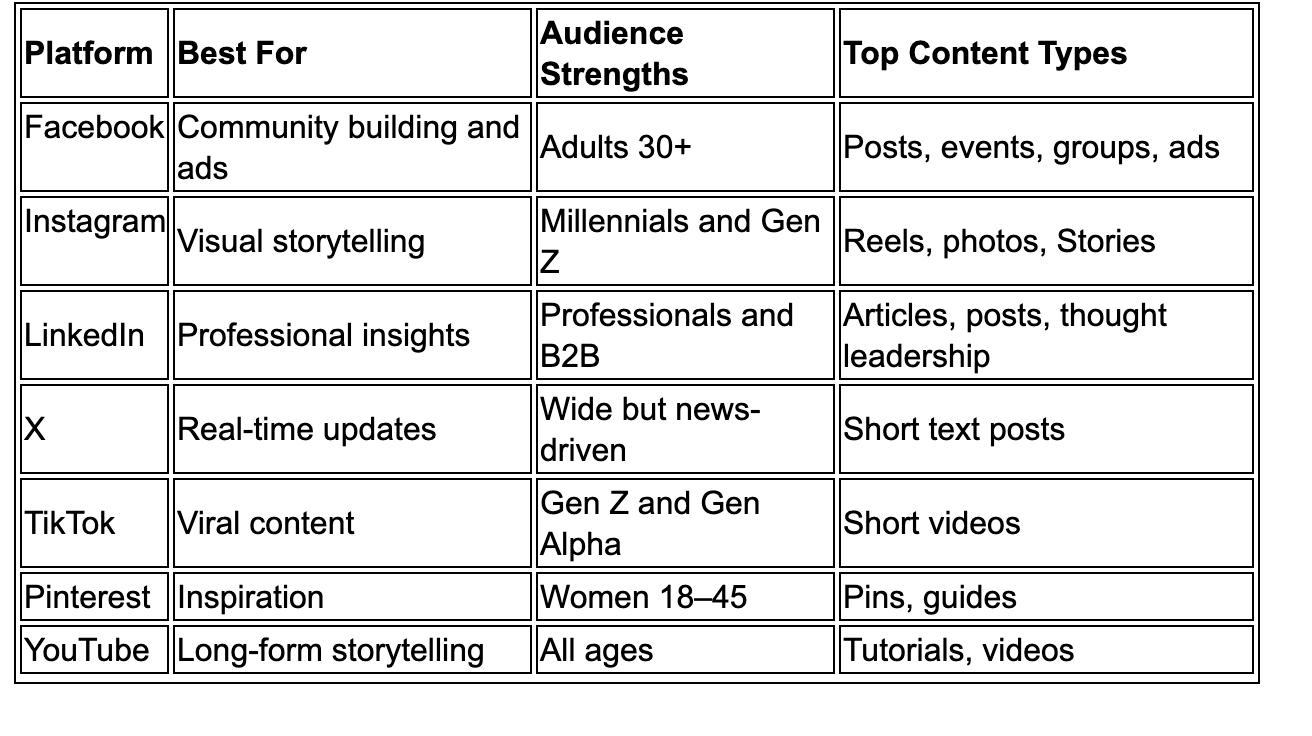
Facebook remains a powerful space for connection. Its broad reach and strong community features make it ideal for brands that thrive on relationship building and storytelling. With robust targeting tools and easy event promotion, it’s especially effective for reaching older audiences and families who value familiarity, conversation and consistent engagement.
Instagram is built for visual storytelling. It’s where lifestyle, travel, retail and food brands can shine through photos, stories and reels (short videos). Reels continue to drive the most reach and influencer partnerships thrive here. With culture-shaping trends emerging daily, it’s the place to inspire, showcase personality and connect through creativity.
LinkedIn is the go-to space for professional connection. It excels at B2B marketing, thought leadership and industry insights. Brands that share educational content or showcase expertise build credibility quickly. LinkedIn is ideal for organizations looking to strengthen authority, nurture relationships and stay visible among decision makers who value clarity, insight and real-world experience.
X (formerly Twitter)
X is fast, conversational and built for real-time updates. It’s ideal for brands with a strong voice or those in industries where news moves quickly. From quick announcements to customer support, it’s a place to stay agile, join timely conversations and show personality in short, memorable moments.
TikTok
TikTok thrives on quick, creative, trend-driven videos. Its high-energy, playful environment makes it ideal for reaching younger audiences and building visibility fast. Small brands often take off here with authentic, low-budget content that feels real. It rewards experimentation, personality and joining the cultural moment with confidence and fun.
Pinterest works like a visual search engine, making it a strong space for discovery. People come for inspiration, products and practical ideas. It’s especially powerful for eCommerce, lifestyle content, DIY brands and recipe creators. With evergreen pins that surface over time, it drives long-term traffic and steady audience interest.
YouTube
YouTube is the go-to platform for long-form video and in-depth storytelling. Tutorials, product demos, interviews and behind-the-scenes content all perform well here. Its search-driven nature gives videos long shelf lives, making it a strong tool for building authority, educating audiences and earning consistent, long-term visibility.
Platform Quick Comparison
How to Succeed on Social Media
A strong strategy keeps your social presence focused and effective.
1. Set Clear Goals
Clear goals keep your social media efforts focused. Decide whether you’re aiming for awareness, engagement, website traffic or leads. When you know the outcome you want, you can create content with purpose, measure progress meaningfully and avoid posting just to fill space. Direction turns activity into impact.
2. Know Your Audience
Knowing your audience shapes everything you create. Research who they are, where they spend time and what content resonates with them. These insights help you tailor messages that feel relevant and personal. When you understand their needs and habits, your content becomes more intentional, effective and aligned with your audience’s expectations.
3. Choose the Right Channels
Choosing the right channels saves time and strengthens your impact. You don’t need to be on every platform, just on the ones where your audience is already active and engaged. When you invest your energy wisely, your content feels more strategic, your presence stays consistent and your social media is more effective.
4. Develop a Content Plan
A solid content plan keeps your social presence organized and purposeful. Decide what you’ll post and how each piece supports your goals. Mix formats like videos, photos, carousels and stories to keep things fresh. Plan themes, messages and ideas that align with your brand so everything feels consistent and intentional.
5. Establish Brand Voice and Visuals
A clear brand voice and visual style help your audience recognize you instantly. Keep your tone, colors, fonts and message style consistent across platforms so everything feels connected. This consistency builds trust, strengthens identity and makes your content more memorable, no matter where people see you.
6. Create a Content Calendar
A content calendar keeps your workflow smooth and stress-free. Planning posts ahead helps you stay consistent, avoid last-minute scrambling and maintain a balanced mix of topics and formats. It also gives you space to think strategically, track upcoming events and create content that supports your goals rather than reacting on the fly.
7. Track Performance
Tracking performance eliminates guesswork. Use platform insights to see which posts resonate and which fall short. When you understand what works, you can refine your strategy, improve future content and focus energy where it matters. Data-driven decisions lead to stronger results and a more effective social presence.
Mini Case Study
A small bakery launched a TikTok account showcasing behind-the-scenes clips of frosting cupcakes. No fancy production. Just honest, fun moments. Within months, they built a loyal following and doubled in-store traffic. Authenticity beat perfection.
Content Creation Essentials
Content creation is where your brand’s personality shines. Use clear visuals, meaningful messages and consistent style to connect with your audience and make every post feel intentional.
Types of Content
- Educational: Educational content offers tips, tutorials and how-tos that help your audience learn something useful. It builds trust, positions your brand as a guide and keeps people coming back.
- Entertaining: Entertaining content brings personality to your feed. Fun moments, relatable humor and behind-the-scenes glimpses make your brand feel human and approachable, encouraging people to engage and share.
- Inspirational: Inspirational content motivates and uplifts. Quotes, success stories and customer wins remind your audience what’s possible, reinforce your brand’s values and spark emotional connection that keeps people engaged.
- Promotional: Promotional content highlights your products, services and offers in a clear, helpful way. When balanced with value-driven posts, it guides people toward action without overwhelming your audience.
Best Practices
- Use strong visuals. Engaging photos and videos grab attention instantly and help your message land. When your content looks intentional, people are more likely to pause, engage and remember your brand.
- Write captions that feel human. Honest, helpful language feels more inviting than robotic or overly formal wording. When your voice feels human, people connect faster and engage more naturally with your content.
- Use hashtags with intention. The right ones help new audiences discover your content without cluttering your caption. Keep them relevant, focused and supportive of your message so they enhance visibility rather than distract from it.
- Keep video short. People scroll quickly, so grab attention in the first few seconds. Lead with energy, clarity and a clear point to keep viewers watching and wanting more.
The 80/20 Rule
The 80/20 rule keeps your content balanced and your audience engaged. Aim for 80 percent value-driven posts that educate, inspire or entertain. Reserve the remaining 20 percent for clear, purposeful promotion. This balance helps build trust, keeps followers interested and ensures your brand feels helpful rather than overly sales focused.
Repurposing Content
Repurposing content helps you get more mileage out of your best ideas. Turn blogs into carousels, podcasts into clips and interviews into shareable quotes. It saves time, keeps your message consistent and helps you reach people on the platforms they prefer. Smart reuse makes your content reach more people with less effort.
Engagement and Community Building
Building a presence on social media isn’t just about posting content. It’s about creating a space where people feel seen, appreciated and connected to your brand. Engagement is the bridge between showing up online and actually building a loyal, active community.
Show Up in the Comments
Responding to comments, answering questions and acknowledging messages goes a long way. When someone takes time to interact with your content, returning that attention shows you value them. Simple actions like saying thanks or offering a helpful answer create trust and make your brand feel approachable.
Use Interactive Content to Spark Conversation
Polls, Q&As, quizzes and contests invite people to participate rather than passively scroll. These tools give you insight into what your audience cares about and encourage them to share opinions and ideas. People love feeling involved, and interactive content turns them into active contributors.
Leverage User-Generated Content
User-generated content is one of the most powerful forms of social proof. When customers share photos, reviews or personal stories, it adds credibility you can’t buy. Featuring their content not only boosts trust but also makes your audience feel valued. It signals that they’re part of something bigger, not just spectators.
Lead with Authenticity
Authenticity is the foundation of lasting community. Forced, overly polished or scripted content can push people away. Be honest. Be transparent. Let your brand’s real personality come through. When you show up as your genuine self, your audience will too, and that’s where true community begins.
Social Media Analytics: Measuring Success
Social media analytics give you clarity and direction. By tracking core metrics, you can see what resonates, what falls short and where to adjust. It doesn’t need to be complex. Focus on the fundamentals, learn from the patterns and use those insights to refine your strategy and strengthen your overall performance.
Key Metrics
Measuring the right metrics keeps your social strategy focused and meaningful. While organic analytics stay fairly consistent month to month, paid metrics shift depending on your campaign goals. Knowing what to track and why helps you make smarter decisions and understand what’s truly working.
Organic Metrics That Matter Every Month
Organic performance is all about understanding how your audience interacts with your content over time. The core metrics only really change if your goals do, which makes it easier to compare month to month.
- Impressions show how often your content appears.
- Follower count tracks growth and overall audience interest.
- Engagement rate reveals how compelling your content is.
- Video views help you understand what captures attention.
Because these metrics stay steady, they’re great for spotting trends, testing ideas and refining your long-term approach.
Paid Metrics Shift With Your Objective
Paid campaigns are a different story. The “right” metrics depend entirely on your goal. For brand awareness, you’ll focus on impressions and CPM to measure reach and cost efficiency. For traffic, CTR and CPC matter most because they show how effectively your ads move people to your site. Other objectives like conversions, leads or engagement each come with their own priority metrics.
Why It Matters
When you match the metric to the mission, your analytics tell a clearer story. You waste less time guessing and spend more time optimizing what actually drives results.
Common Social Media Mistakes to Avoid
Even the best brands slip up sometimes. Here are the pitfalls to steer clear of.
- Posting without a strategy
Posting without a strategy leads to scattered results. When you’re simply checking a box, your content lacks purpose and direction. A clear plan helps every post support your goals, speak to your audience and build momentum. Intentional content will always outperform guesswork in the long run, and your results will reflect the difference. - Ignoring analytics
Ignoring analytics leaves you flying blind. Without data, every decision becomes a guess and small issues go unnoticed. Tracking performance shows what resonates, what needs improvement and where to focus your energy. When you pay attention to the numbers, you can refine your strategy and make smarter choices.
- Being overly promotional
Being overly promotional can turn followers off fast. Constant sales messages make your brand feel pushy instead of helpful. People want value, not non-stop pitching. When you balance promotional posts with content that educates, entertains or inspires, you build trust and keep your audience engaged. A lighter touch leads to stronger connections.
- Copying and pasting the same content everywhere
Copying and pasting the same content across every platform weakens your message because each channel has its own style, audience and expectations. When you tailor posts to fit the platform, your content feels more natural and engaging. A little customization goes a long way in helping your brand show up thoughtfully and effectively.
- Neglecting engagement
Neglecting engagement sends the message that you aren’t listening. When people comment, ask questions or share your content, they’re inviting you into a conversation. Responding builds trust and shows you value their time. Ignoring them can push followers away. If people talk to you, talk back and strengthen the relationship.
- Falling behind on trends and updates
Falling behind on trends and platform updates can limit your reach. Social media changes fast, and what worked last year might not work today. Staying current helps you adapt your strategy, use new features and meet audience expectations. When you evolve with the platforms, your content stays relevant and competitive.
Avoiding these mistakes helps your social presence stay strong, credible and consistent. When you steer clear of common pitfalls, your content feels intentional and your audience stays more engaged.
The Future of Social Media Marketing
The social landscape moves fast. Platforms continuously offer new formats, new tools and new expectations. The brands that thrive are the ones willing to evolve while staying true to who they are. Here’s what’s shaping the next wave of social media.
Short-Form Video Keeps Leading the Way
Short-form video isn’t slowing down. Platforms like TikTok, Instagram Reels and YouTube Shorts continue to drive massive reach. Audiences want quick, digestible content that entertains or informs in seconds. Brands that learn to communicate clearly and creatively in short formats will stay ahead of the curve.
Social Commerce Becomes the New Norm
Buying directly inside apps has shifted from novelty to everyday behavior. From Instagram Shops to TikTok Shop, social commerce makes it easier for people to discover, consider and purchase without leaving the platform. For brands, this creates a more seamless experience and a shorter path to conversion.
AI Tools Support Smarter Workflows
AI is becoming a behind-the-scenes powerhouse. It helps brainstorm ideas, schedule content, analyze performance and streamline repetitive tasks. But AI is a tool, not a voice. Automation may save time, but authenticity still drives connection. People want to hear from real humans.
Virtual Experiences and Web3 Begin to Shape Engagement
We’re seeing early steps into virtual events and immersive digital spaces. While still emerging, these directions point to more interactive, community-first environments where audiences participate rather than observe.
Creators Hold the Influence
The creator economy keeps growing. Personalities and niche experts often carry more trust than big brands. Partnering with creators or empowering your internal voices will become even more essential.
In all of this evolution, the winning brands stay flexible, curious and unmistakably human.
Conclusion
Social media is a powerful space where brands can grow, connect and thrive. Success doesn’t come from chasing virality. It comes from consistency, clear strategy, strong content, genuine engagement and smart analytics.
If you’re just getting started, keep it simple. Pick a platform or two so you can show up regularly. Listen to your audience and use data to guide you. Over time, your presence becomes stronger, your community gets bigger and your brand becomes something people recognize and trust.
Ready to grow your social presence? Reach out and let’s build a strategy that works.